
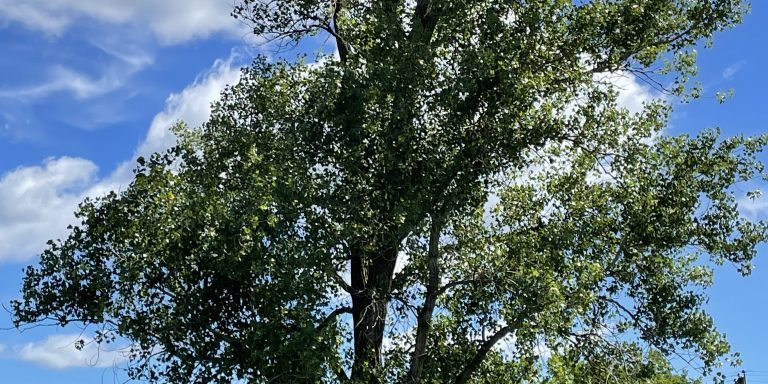
Cottonwood Tree
Leaves are more or less triangular, with tapered points, measuring 3—9 inches long (leaves tend to be larger in the southern Midwest than in the north). The edges are toothed with 40—50 rounded, large teeth. The surface is bald on both sides; the color is dark green above, with paler green underleaves. The leaf-stems are up to 4 inches long and flattened; they are bald and green to yellowish green. There are 3—5 small glands at the point of attachment to the twig. Sapling leaves often feature red leaf-stems and veins.
Growth-It needs bare soil and full sun for successful germination and establishment; in natural conditions, it usually grows near rivers, with mud banks left after floods providing ideal conditions for seedling germination; human soil cultivation has allowed it to increase its range away from such habitats.
Unlike related species such as quaking aspen, it does not propagate through clonal colonies, but will resprout readily when cut down.
The leaves serve as food for caterpillars of various Lepidoptera.
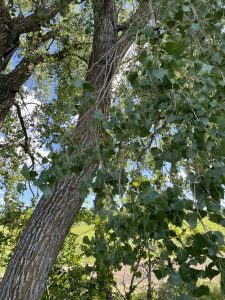
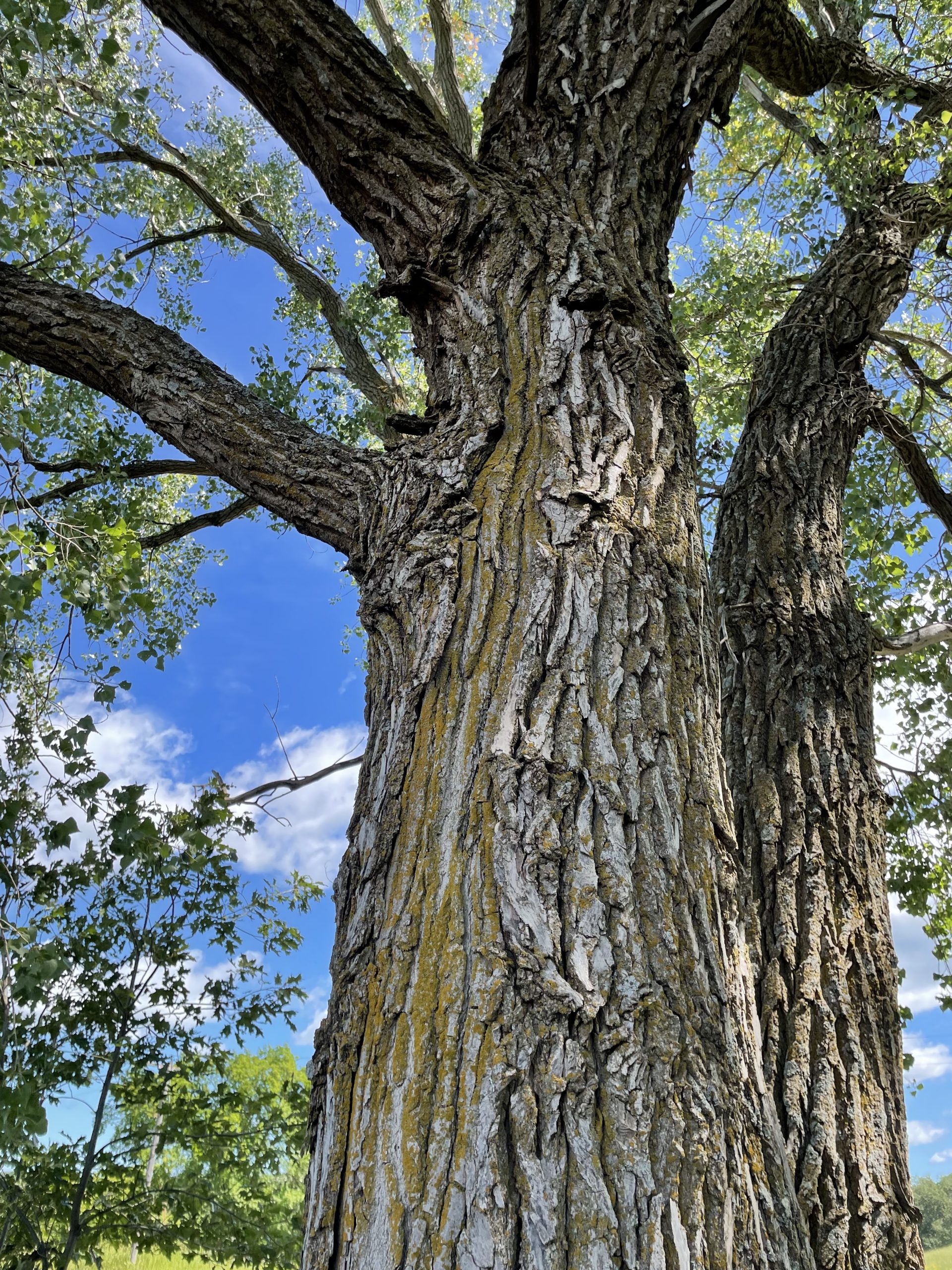
Photo taken by: Sarah Fiddelke